The BUPS: Which beacon was this really?
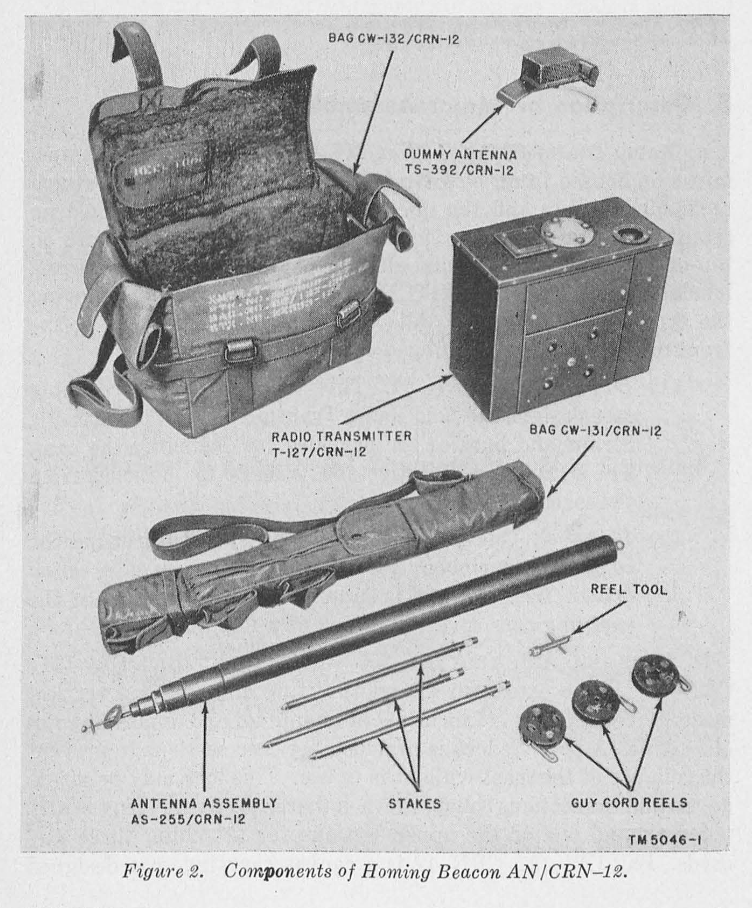
Alan Stanczik sent me the link to this interesting archive video about the ‘BUPS’. According to this, the AN/UPN1 & 2 would have been the actual BUPS, and not what most collectors commonly refer to as the BUPS, i.e. the long bag with the telescopic antenna and ground stakes you can see in the photos below, which is actually the AN/CRN-12. This was a post-war device (the manual is dated 1951).
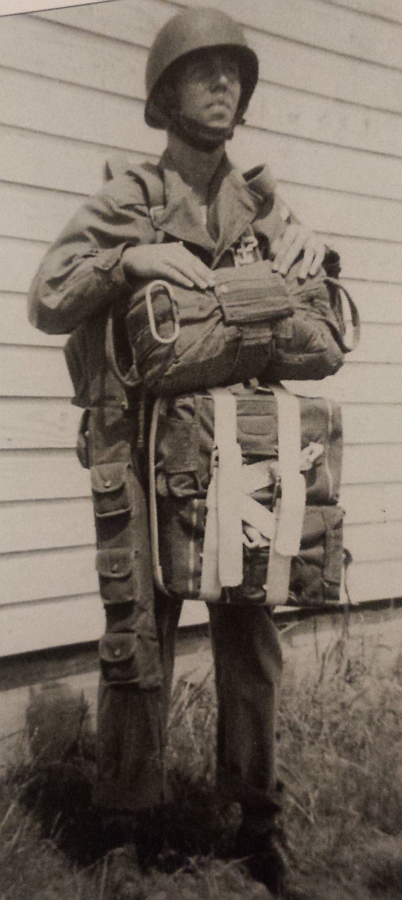
Interestingly though, the paratrooper on the right carries the bag of CRN-12 antenna, along with the CRN-4 beacon, which came in the two padded bags you see here. The CRN-4 was a WWII device and it was used by American pathfinders during Operation Market Garden. From after action reports of the 101st Airborne, we do know that the antenna originally intended for the CRN-4 was replaced with another one after the drop on Holland, but I haven’t been able to find any further details about this.
The AN/UPN-1 & 2 is quite a large device and not really field portable, as you can see in this video:
If you know more about this, please comment here, or send me an email.


found more info that may be of interest http://hangarthirteen.org/wp-content/uploads/2020/10/Graphic-Survey-of-AAF-Radio-Radar-Equipment-Pt-4.pdf
hanger 13 is restoring a b-17 their library contains the complete series on the graphic studies the amount made of each beacon, and dates is very interesting.
critical past Pathfinders of United States 9th Air Force Troop Carrier Command in Grantham, England during World War II go to the site critical past and search this title shows path finder’s training with ppn-1 and Bups 1, in England before D-day, can’t believe I found this. I also have found a Bups battery box and charger complete with all six 2-volt batteries same type batteries as used in PPN-1, which sparked me to do more research the battery box was made by halifactors radio in 1944
https://www.criticalpast.com/video/65675058875_United-States-9th-Air-Force_signal-blinker_power-packs_paratroopers this is the link, I also have the ppn-1 it’s interesting to see the early battery box on them the latter ones had the separate storage cage for the headphones and smaller battery box
also, the crn-12 was not made during WW2 it was made in 1951 or so but was designed during the war for use with the BC-611 with the homing kit installed on it, it sent out a signal so scattered troops/paras could direction find their way to the point to group up. used post war by Oss/Cia
Hi Alan, thanks for sharing your research. Very interesting and this clears up some of the mystery around this. So this BUPS-antenna, was this also post-war? Or which device was it hooked up to, if not the CRN-12?
https://www.radionerds.com/images/3/3b/TM_11-5046.pdf
manual for the crn-12
http://hangarthirteen.org/wp-content/uploads/2020/10/Graphic-Survey-of-AAF-Radio-Radar-Equipment-Pt-3.pdf
crn-4 information note the 12 is not listed
http://www.wftw.nl/WftW%20Various%20Series%2013%20Beacon%20Crest%20v1%2000.pdf
the British paras took a crn-4 and improved it this may explain why info and use of the crn-4 is hard to find as US probably started using the beacon crest
The CRN-4 was replaced with the CRN-4-A, which used a telescopic single antenna AS-234/CRN-4-A, the carry bag for the antenna is CW-125/CRN-4-A. The carry bag has a 4-inch diameter and is 36 inches long. I believe this version was based on the 1943 British para beacon design.
the post war CRN-12 has a very similar antenna and carry bag the Antenna was a AS-255 and carry bag CW-131
Hi Alan, thank you for sharing all that. It would explain the confusion about the antenna matter. If they started using a telescopic antenna for the CRN-4(-A), the bag could indeed have remained the same as used for the CRN-12 antenna. What does the AS-234/CRN-4-A antenna look like? I mean, I would not expect it to have the ball at the base, because the CRN-4 device did not have a recess to accommodate this. Could it have had a pin or a flat base, and then held upright with the 3 guy lines and then wired to the radio set?